
The Rose-Mallow Bee and the Flower It Calls Home

Updated: Apr 10
You have probably made it before. Dried red petals, a pot of water, a deep crimson pour over ice. Agua de jamaica is one of those recipes that lives in the hands of grandmothers, not in cookbooks. But the hibiscus flower it comes from carries a story much older and much wider than any single kitchen.
The Hibiscus Health Benefits
Hibiscus has been used by Indigenous communities across the Americas for food, medicine, and ceremony for centuries. Long before it appeared in modern wellness marketing, it was already doing its work.
Here is what the research shows, grounded in what our communities have practiced for generations:
May help lower blood pressure and cholesterol
Supports digestive health and has been used to ease stomach issues
The flowers and bark have traditionally been used to soothe coughs, colds, and bronchial congestion
Applied as a poultice, hibiscus has been used topically to reduce inflammation and support wound healing
The root has been used to ease anxiety and calm the nervous system
Young hibiscus leaves are also edible. They can be added raw to salads or cooked like spinach. The flower itself becomes the base for beverages, jams, sauces, and more.
Source: USDA Forest Service
Native Bees: The Reason Hibiscus Exists in the First Place
Before we can harvest hibiscus, something has to pollinate it. That something, more often than not, is a native bee.
Texas is home to hundreds of native bee species, and they are doing work that most people never think about. Unlike honeybees, which are non-native and often get the credit, native bees evolved alongside native plants. That relationship is specific, mutual, and irreplaceable.
What Do Native Bees Pollinate?
Native bees pollinate a wide range of the foods we grow and eat, including:
Watermelons, cantaloupe, cucumbers, squash, and pumpkins
Tomatoes, peppers, and blueberries
Peaches, pears, and pecans
Cotton and countless wildflowers
Beyond agriculture, native bees pollinate roughly 87% of flowering plants in the wild. That biodiversity sustains food sources for wildlife and keeps ecosystems in balance.
Source: University of Texas
Why Do Bees Pollinate at All?
Bees are not doing us a favor. They are feeding themselves. Pollen is their protein source, and as they move from flower to flower, pollen rubs off and travels with them. Many native bees have strong floral preferences, meaning they return to the same species of flower during a foraging season. That loyalty is what makes them such effective pollinators: the right pollen reaches the right flower.
And for many native plants, including hibiscus, native bees and other native pollinators are the only ones who can complete the job.
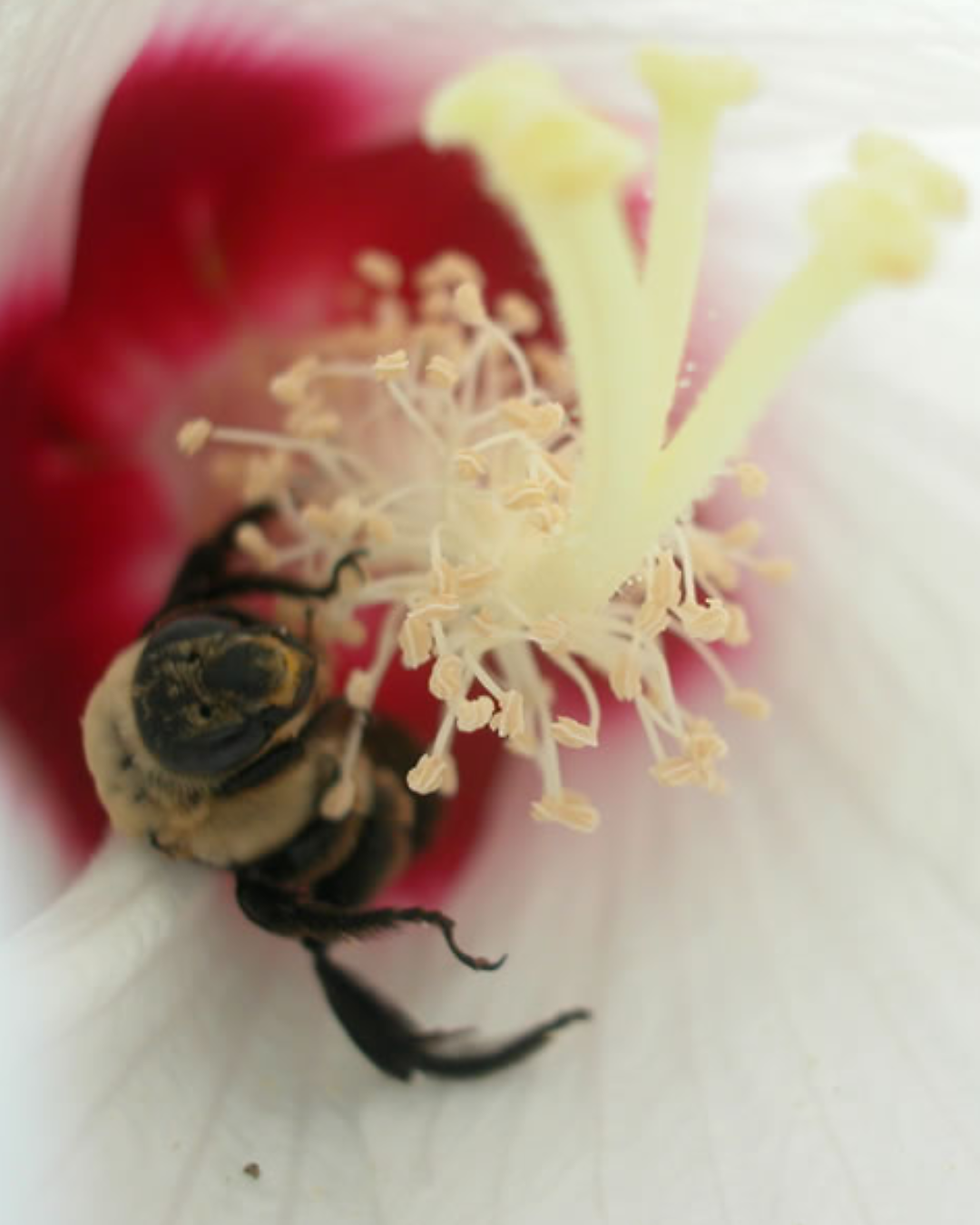
The Rose-Mallow Bee and the Hibiscus Flower: A Relationship Worth Knowing
One of the most striking examples of this relationship is the native Rose-Mallow bee. This bee is what is called a specialist: it relies heavily on hibiscus. Males have been known to live and rest inside the blooms themselves.
This is not coincidence. This is co-evolution. The plant and the bee developed alongside each other, and both depend on the other to thrive.
When we plant hibiscus in our gardens or tend it on our land, we are not just growing medicine for ourselves. We are also creating habitat for the bee that keeps it alive.
How to Show Gratitude to Our Pollinator Relatives
Ancestral practices of tending the land have always included care for the creatures that share it.
Here are two grounded ways to extend that care today:
Plant native Texas plants in your garden or yard. Hibiscus, native wildflowers, and other indigenous plants give native bees the specific food sources they need.
Avoid pesticides. Even pesticides marketed as safe can be harmful to native pollinators. A healthy community of bees requires a yard and neighborhood free from chemical interference.
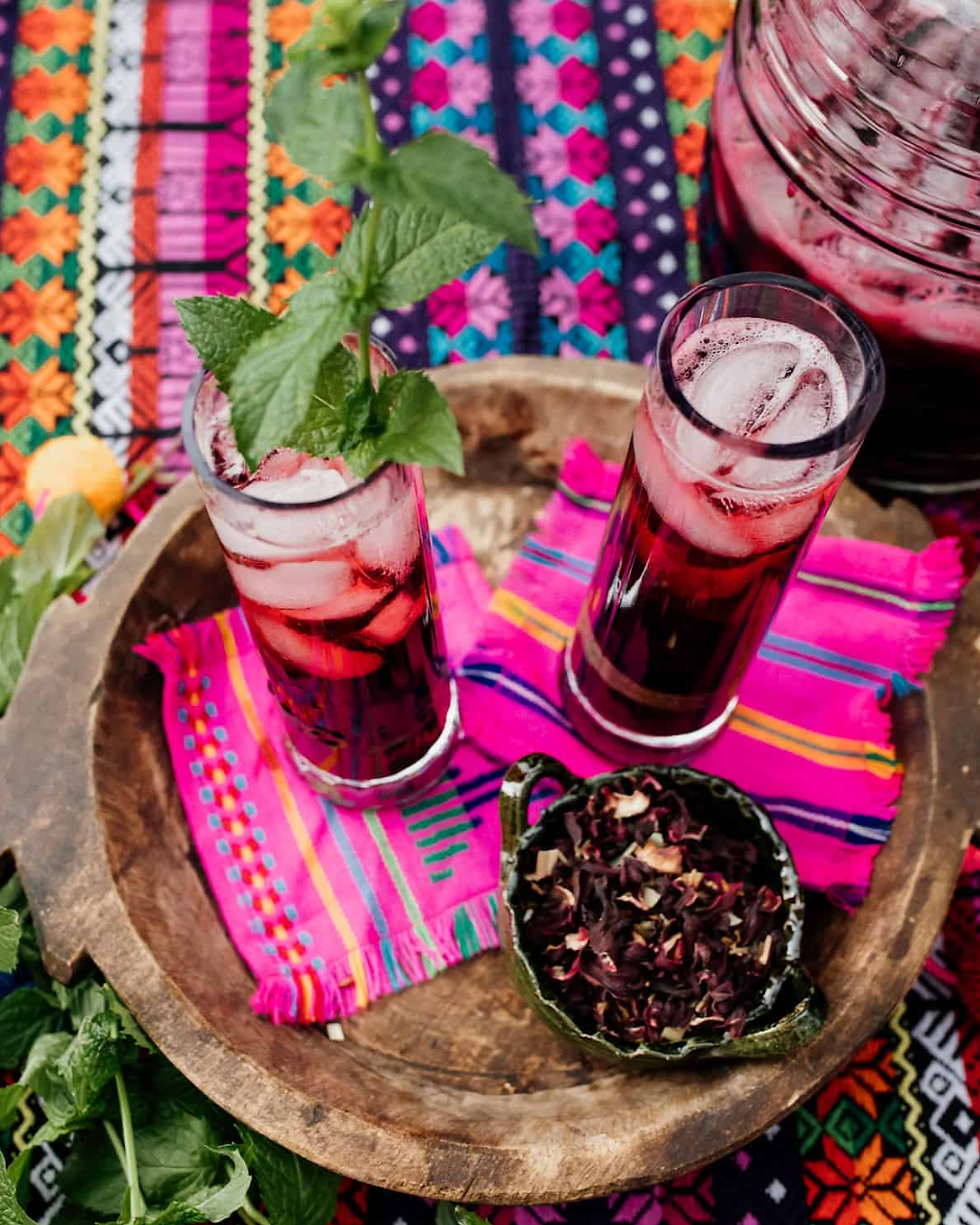
Agua de Jamaica: How to Make Hibiscus Tea at Home
This is the recipe that many of us already know. Here it is written down, in case you want to pass it on.
Ingredients
1 cup dried hibiscus flowers
2 cups water per cup of hibiscus
2 liters additional water to dilute
Sweetener to taste
Ice, optional
Instructions
Rinse the dried hibiscus flowers.
Add 2 cups of water for every cup of dried hibiscus into a pot.
Bring to a boil, then reduce to a medium simmer until the water turns a deep red color.
Strain the flowers from the liquid and transfer to a pitcher.
Add 2 liters of water to dilute.
Sweeten as desired. Add ice if desired. Serve and share.


Comments